
How to Hold a Plank for Longer Periods of Time
Learn proven techniques and progressive training strategies to build core strength and endurance so you can hold a plank position for longer and longer durations.
 Harsh Pare7 steps~20 minPublished May 1, 2026
Materials
- Exercise mat or soft surface
- Timer or stopwatch
- Optional: resistance bands for supplementary exercises
Before you start
- Ability to get into a push-up or forearm position on the floor
- No acute back, shoulder, or wrist injuries
Step 1 of 7
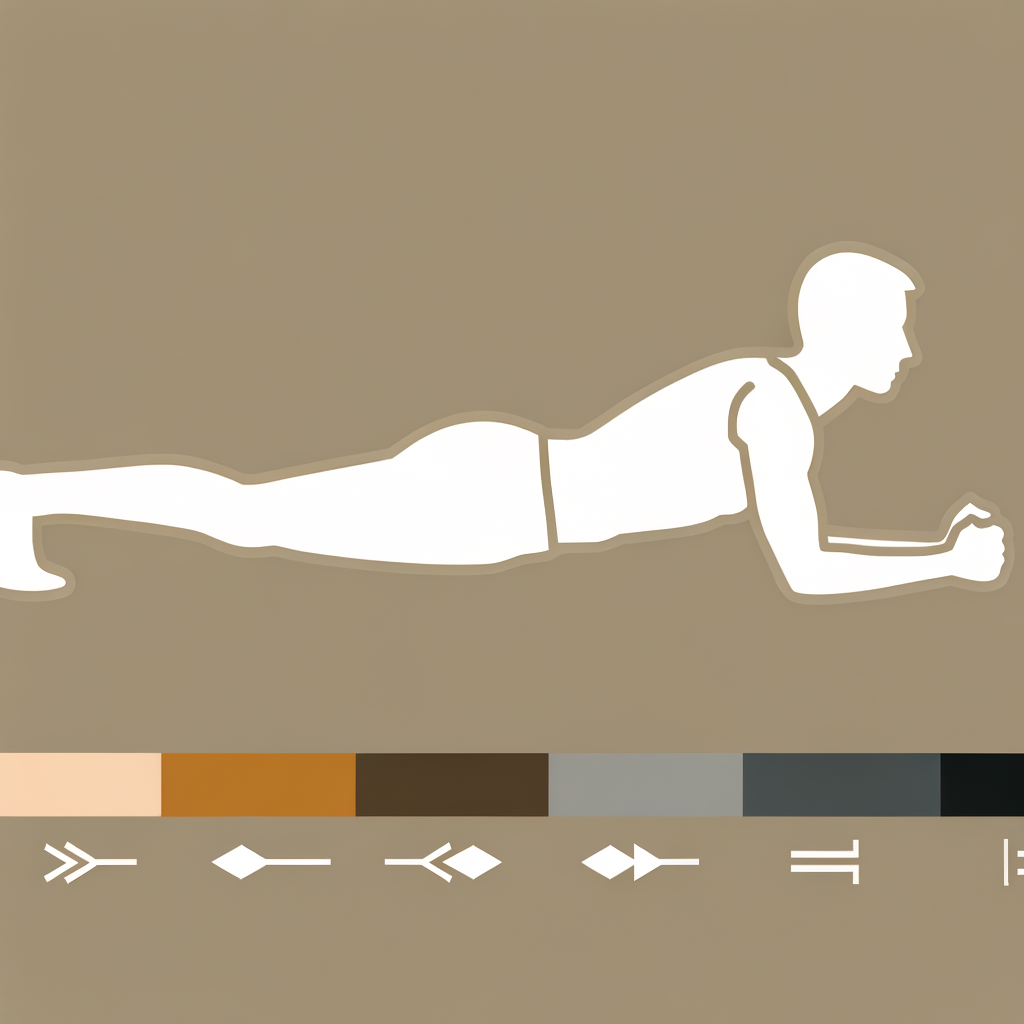
Master Perfect Plank Form
Before chasing time, nail your technique. Get into a forearm plank: place forearms flat on the mat, elbows directly under your shoulders, hands either clasped or flat. Rise onto your toes so your body forms a straight line from head to heels. Key checkpoints: • Head & neck: Look at the floor about 6 inches in front of your hands — keep your neck neutral, not craning up or dropping down. • Shoulders: Press your forearms into the floor and push your shoulder blades slightly apart (protract) to avoid sinking into your shoulders. • Core: Draw your belly button gently toward your spine and brace your abs as if bracing for a punch. • Hips: Keep them level — neither sagging toward the floor nor piking up toward the ceiling. • Glutes & legs: Squeeze your glutes and quads firmly; this takes load off your lower back. • Feet: Hip-width apart for stability, or together for a greater challenge.
Imagine you're trying to drag your elbows toward your toes (without actually moving them) — this engages your lats and deepens core activation instantly.
Common mistakes
- ×Letting the hips sag, which strains the lower back.
- ×Hiking the hips too high, reducing core engagement.
- ×Holding the breath instead of breathing steadily.
- ×Looking up or forward, causing neck strain.
Step 2 of 7
Establish Your Baseline Hold Time
Before you can improve, you need to know your starting point. Set a timer and get into your perfect plank position. Hold it for as long as you can while maintaining good form — the moment your hips sag or you feel your form breaking down, stop the timer. That duration is your baseline. Record it somewhere (a notes app, a fitness journal, etc.). Common baselines range from 15 seconds to 2 minutes. Don't be discouraged by a short time — everyone starts somewhere, and the progression plan in the next steps is designed for any starting point.
Test your baseline when fresh — not after a workout — for the most accurate measurement.
Common mistakes
- ×Continuing to hold after form breaks down, which builds bad habits and risks injury.
- ×Testing after a tiring workout, which gives an artificially low baseline.
Step 3 of 7
Practice Controlled Breathing
Breathing is the #1 factor that separates a 30-second plank from a 2-minute plank. Most people hold their breath under exertion, which causes rapid fatigue and dizziness. How to breathe during a plank: 1. Inhale slowly through your nose for 2–3 counts, expanding your ribcage laterally (not just your belly). 2. Exhale slowly through your mouth or nose for 3–4 counts, gently pulling your abs in as you breathe out. 3. Keep the rhythm steady and deliberate — treat each breath cycle as a mini reset. Why it works: Controlled breathing keeps your diaphragm engaged (a key core stabilizer), maintains oxygen flow to your muscles, and calms your nervous system, reducing the perceived effort of the hold.
Practice the breathing pattern lying flat on your back first, then transfer it to the plank position — it's much easier to learn when you're not also fighting gravity.
Common mistakes
- ×Holding the breath, which spikes blood pressure and accelerates fatigue.
- ×Breathing too shallowly from the chest, which doesn't engage the diaphragm.
Step 4 of 7
Use Mental Focus Techniques to Push Through Discomfort
A large part of plank endurance is mental. The burning sensation in your core is normal muscle fatigue — not injury — and learning to tolerate it is a trainable skill. Techniques that work: • Chunking: Instead of thinking 'I need to hold for 2 minutes,' break it into 15- or 20-second mental chunks. Tell yourself 'just 15 more seconds' repeatedly. • Body scanning: Cycle your attention through each muscle group — abs, glutes, quads, shoulders — consciously squeezing each one. This distracts from discomfort and improves muscle engagement. • Counting breaths: Count each exhale up to 10, then restart. This anchors your focus and makes time pass faster. • Positive self-talk: Simple phrases like 'I'm getting stronger' or 'stay tight' have been shown to improve exercise endurance.
Put on a song you love and commit to holding for just one verse, then one chorus — music-based chunking is surprisingly effective.
Common mistakes
- ×Staring at the timer the whole time, which makes seconds feel like minutes.
- ×Giving up at the first sign of burning — mild discomfort is normal and expected.
Step 5 of 7
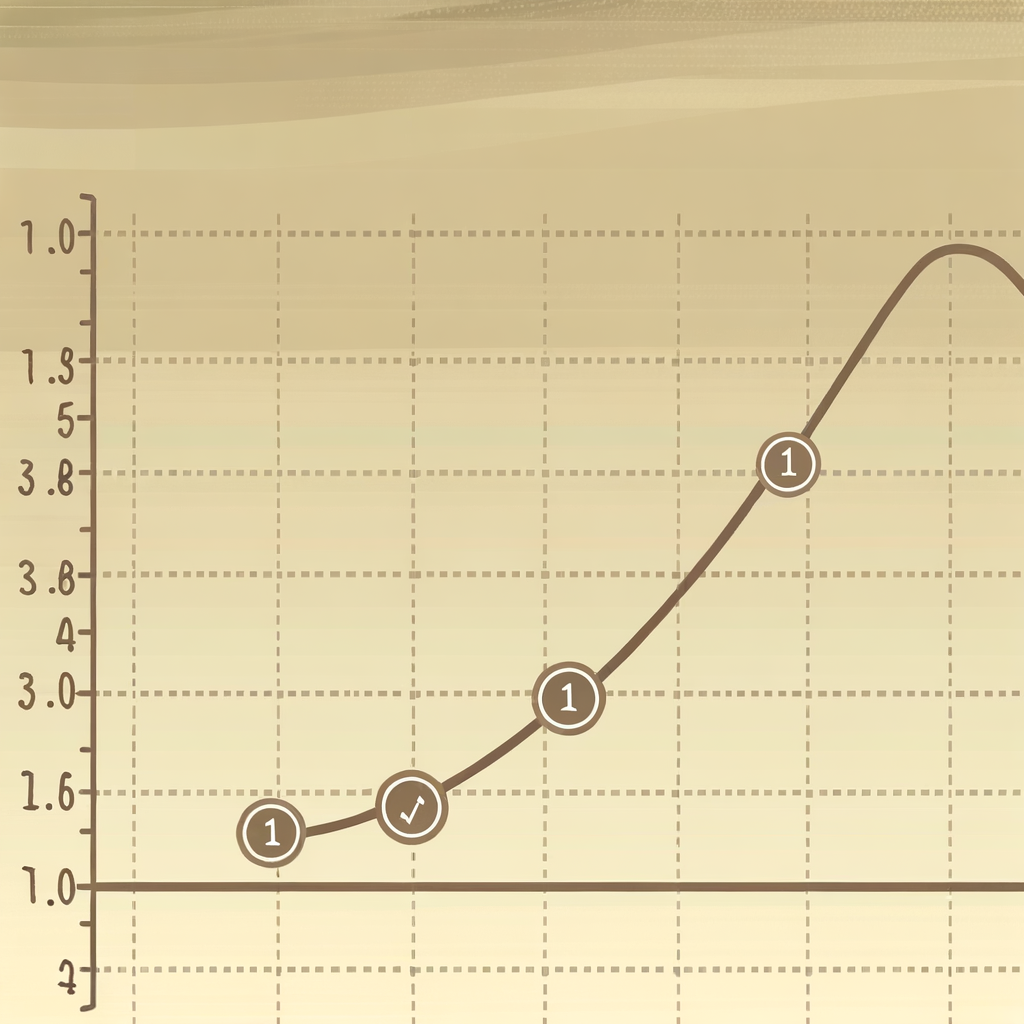
Follow a Progressive Overload Training Plan
Consistency and gradual progression are the keys to building plank endurance. Here's a simple weekly framework: Each session (3–5 days per week): • Perform 3–5 plank sets per session. • Rest 60–90 seconds between sets. • Each set, aim to hold for your current target time (start at your baseline). Weekly progression: • Add 5–10 seconds to your target hold time each week. • Once you can comfortably hold 60 seconds, you can also increase the number of sets. Example 4-week progression (baseline = 20 sec): | Week | Target Hold | Sets | |------|------------|------| | 1 | 20 sec | 3 | | 2 | 30 sec | 3 | | 3 | 40 sec | 4 | | 4 | 50 sec | 4 | Adjust the numbers to your own baseline — the principle is the same: small, consistent increases over time.
If you fail to hit your target time on a given day, don't increase the next week — stay at the same target until you nail it consistently.
- If If you can already hold a plank for 60+ seconds, do Skip to adding plank variations (Step 6) to build more well-rounded core endurance rather than just chasing raw time..
- If If you cannot hold a plank for 10 seconds yet, do Start with a knee plank (knees on the floor) to build foundational strength, then transition to a full plank as you improve..
Common mistakes
- ×Trying to increase time too quickly, leading to form breakdown and burnout.
- ×Skipping rest days — muscles need recovery time to grow stronger.
- ×Only training planks and neglecting other core exercises.
Step 6 of 7
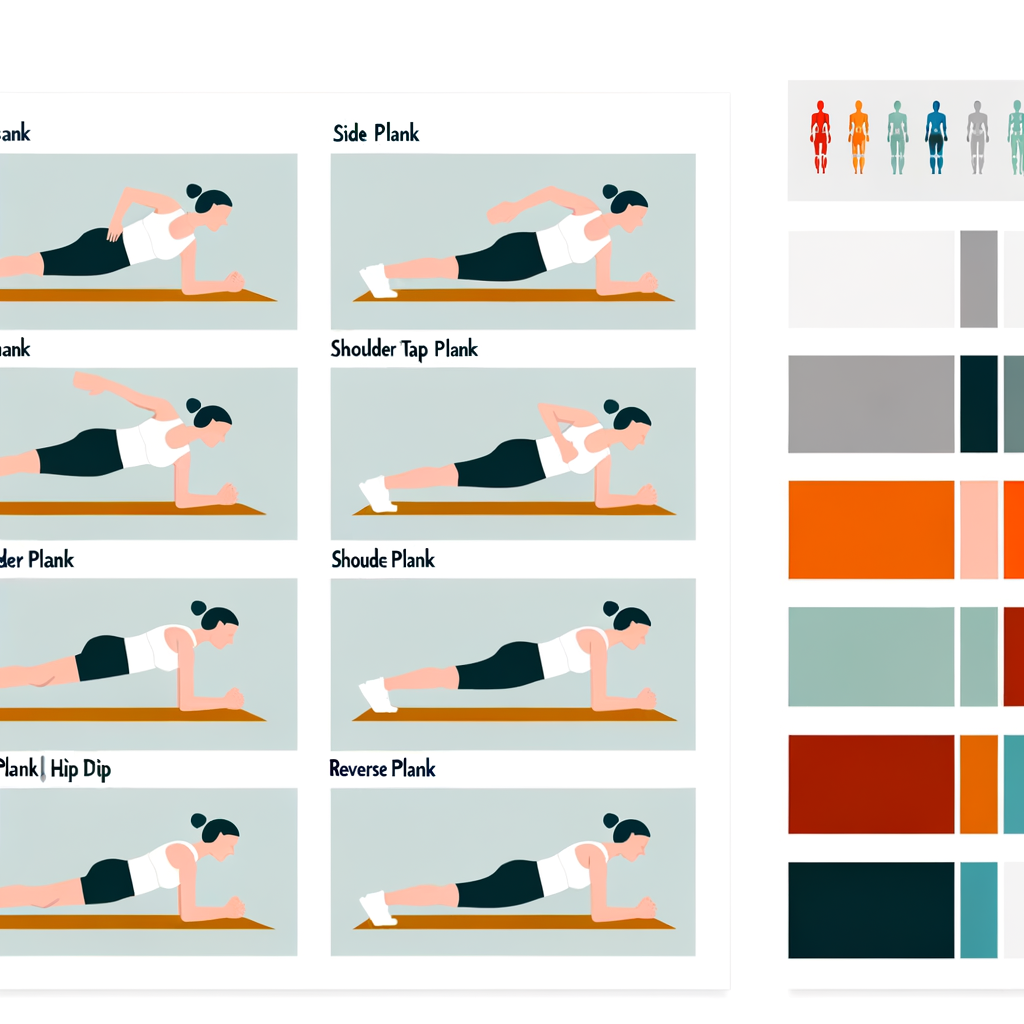
Strengthen Supporting Muscles with Plank Variations
Your plank time is limited not just by your abs, but by your glutes, shoulders, hip flexors, and back. Adding variations targets these supporting muscles and breaks through plateaus. Top variations to add to your routine: 1. Side Plank — Targets obliques and hip abductors. Hold 20–45 sec each side. 2. Plank with Shoulder Taps — Lift one hand to tap the opposite shoulder while keeping hips still. 10–15 taps per side. Builds anti-rotation stability. 3. Plank Hip Dips — In forearm plank, slowly rotate hips to dip each side toward the floor. 10 reps per side. Strengthens obliques. 4. Reverse Plank — Sit on the floor, place hands behind you, and lift hips to form a straight line facing the ceiling. Strengthens glutes and posterior chain. 5. Plank to Push-Up — Alternate between forearm and high (straight-arm) plank. 8–10 reps. Builds shoulder endurance. Rotate 1–2 variations into each session alongside your standard plank holds.
Side planks are often the fastest way to break through a standard plank plateau because the obliques are a major but commonly undertrained stabilizer.
Common mistakes
- ×Adding too many variations at once — introduce one new variation per week.
- ×Rushing through variations with poor form instead of slow, controlled movement.
Step 7 of 7
Track Progress and Celebrate Milestones
Tracking your plank times turns an invisible effort into visible progress, which is one of the most powerful motivators to keep going. How to track effectively: • Log each session: date, hold time per set, how it felt (easy / moderate / hard). • Re-test your max hold every 2 weeks under fresh conditions. • Take note of what helped (a good night's sleep, a particular song, a breathing rhythm). Milestone targets to celebrate: • 🏅 30 seconds — You've built a real foundation. • 🏅 1 minute — You're in the top half of most gym-goers. • 🏅 2 minutes — Excellent core endurance. • 🏅 5 minutes — Elite level; shift focus to weighted or dynamic planks. Share milestones with a friend or workout partner for extra accountability.
Take a short video of your plank every few weeks — seeing your improved form and stability over time is incredibly motivating.
Common mistakes
- ×Not tracking at all, making it hard to notice real progress.
- ×Comparing your times to others online instead of to your own previous bests.
Sources
Generated from model knowledge — verify any factual claims independently.