
How to Drink Beer and Enjoy It to the Fullest
Learn how to properly select, pour, and drink beer so you can appreciate its flavors, aromas, and character like a seasoned enthusiast.
 NamanJain6 steps~15 minPublished May 2, 2026
Materials
- A beer of your choice (bottle, can, or draft)
- An appropriate glass (pint glass, tulip, mug, etc.)
- A bottle opener (if needed)
- A clean, dry cloth or paper towel
Before you start
- Must be of legal drinking age in your country or region
Step 1 of 6
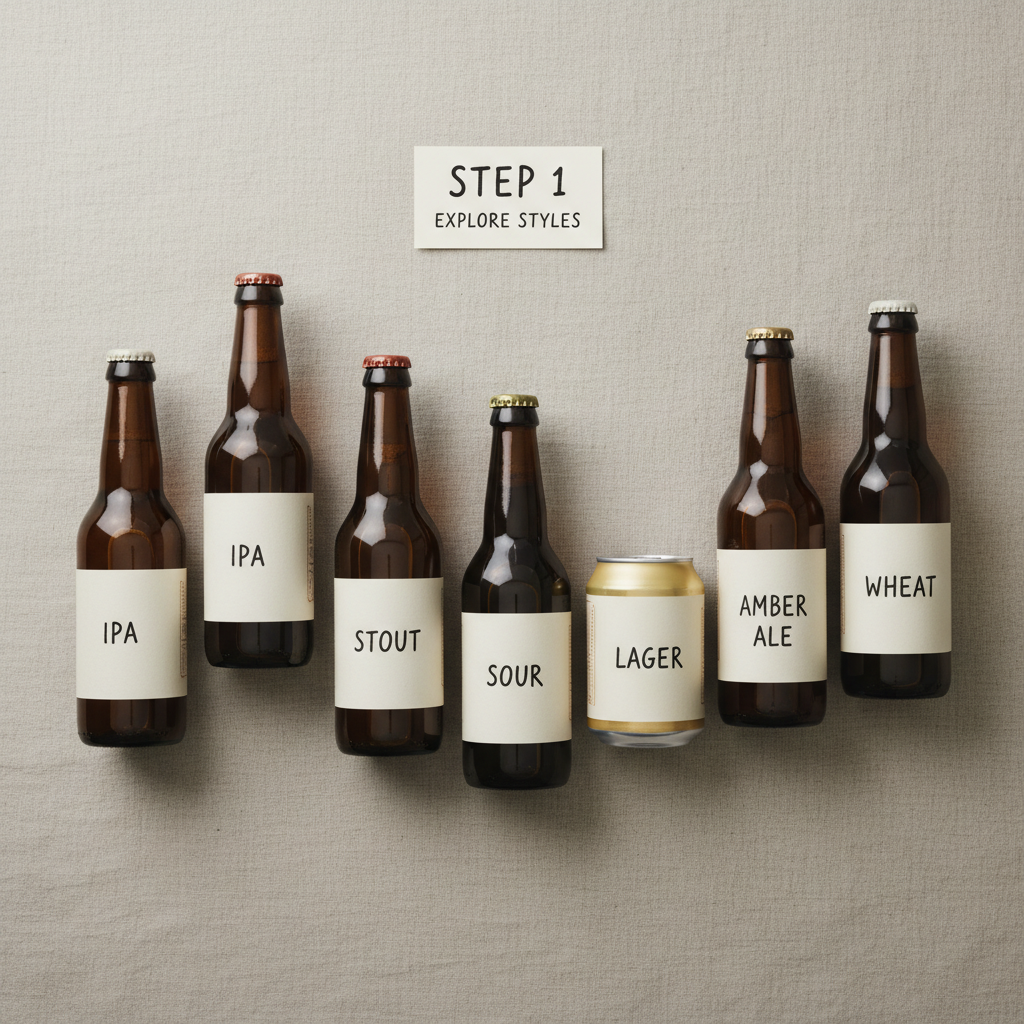
Choose the Right Beer for Your Taste
Beer comes in a huge variety of styles, each with its own flavor profile. Here is a quick breakdown to help you pick: 1. Lager — Light, crisp, and refreshing. Great for beginners or hot days. Examples: Budweiser, Heineken, Corona. 2. Wheat Beer — Smooth, slightly fruity, and easy to drink. Examples: Blue Moon, Hoegaarden. 3. Pale Ale / IPA — Hoppy and sometimes bitter, with citrus or floral notes. Good if you enjoy bold flavors. 4. Stout / Porter — Dark, rich, and roasty with hints of coffee or chocolate. Examples: Guinness. 5. Sour Beer — Tart and tangy, an adventurous choice for those who like unusual flavors. If you are new to beer, start with a lager or wheat beer for a mild, approachable experience. As your palate develops, explore bolder styles.
Check the ABV (Alcohol By Volume) on the label. Beers typically range from 3% to 12%+ ABV. Start with lower ABV options if you are new to drinking.
Common mistakes
- ×Picking a very bitter IPA as your first beer — the strong hop bitterness can be off-putting for beginners.
- ×Ignoring the style description on the label, which can lead to an unpleasant surprise.
Step 2 of 6
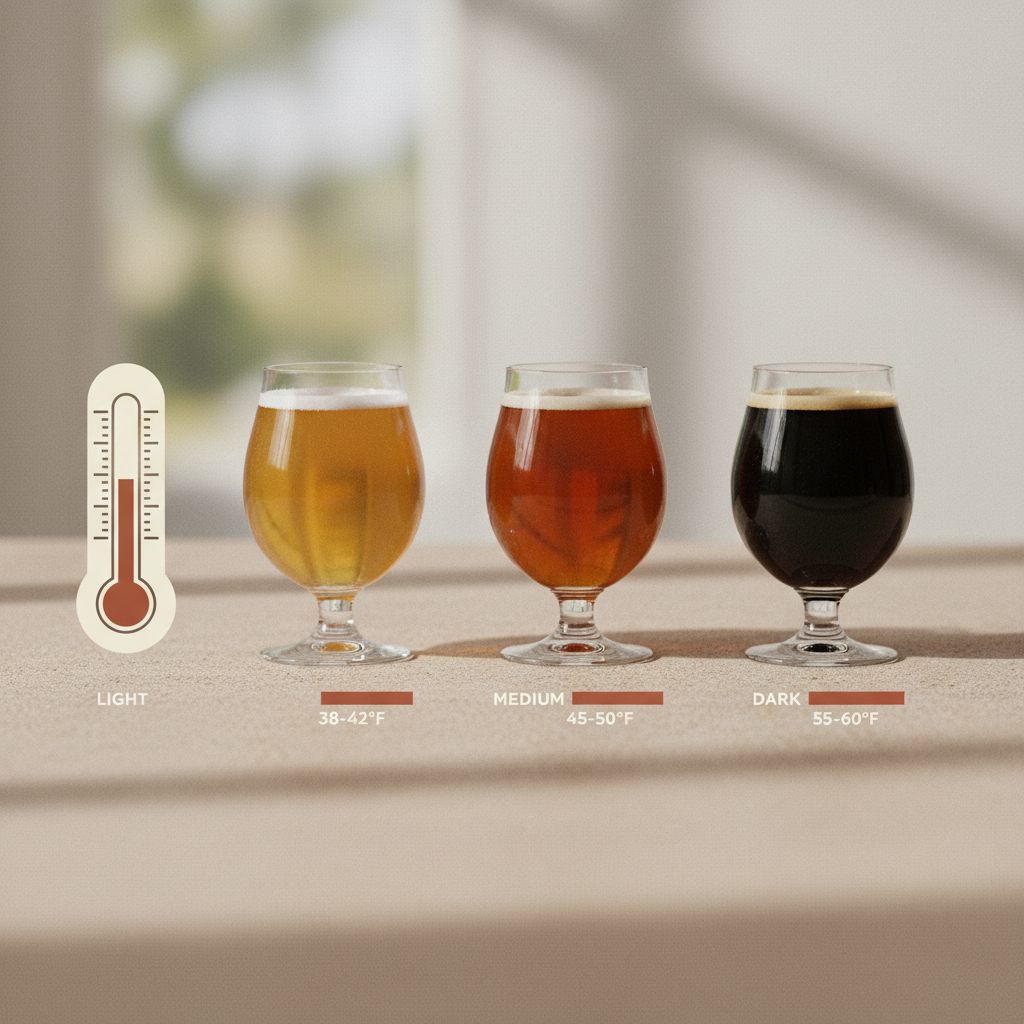
Serve the Beer at the Right Temperature
Temperature has a big impact on how a beer tastes. Serving it too cold mutes the flavors, while too warm can make it taste flat or unpleasant. General guidelines: 1. Light lagers and wheat beers: Serve very cold, around 3–5 degrees Celsius (38–41 F). These are most refreshing when chilled. 2. Pale ales and IPAs: Serve slightly less cold, around 7–10 degrees Celsius (45–50 F), so the hop aromas can shine. 3. Stouts and dark ales: Serve at cellar temperature, around 10–13 degrees Celsius (50–55 F), to bring out the rich, complex flavors. If your beer is in the fridge, it is likely already at a good temperature for most styles. If it is a dark or craft beer, let it sit out for a few minutes before drinking.
Never freeze beer to chill it quickly — it can alter the flavor and cause the bottle or can to burst.
Common mistakes
- ×Drinking a craft stout straight from the fridge — it will taste thin and the flavors will be muted.
- ×Letting a light lager get too warm — it becomes flat and loses its refreshing quality.
Step 3 of 6
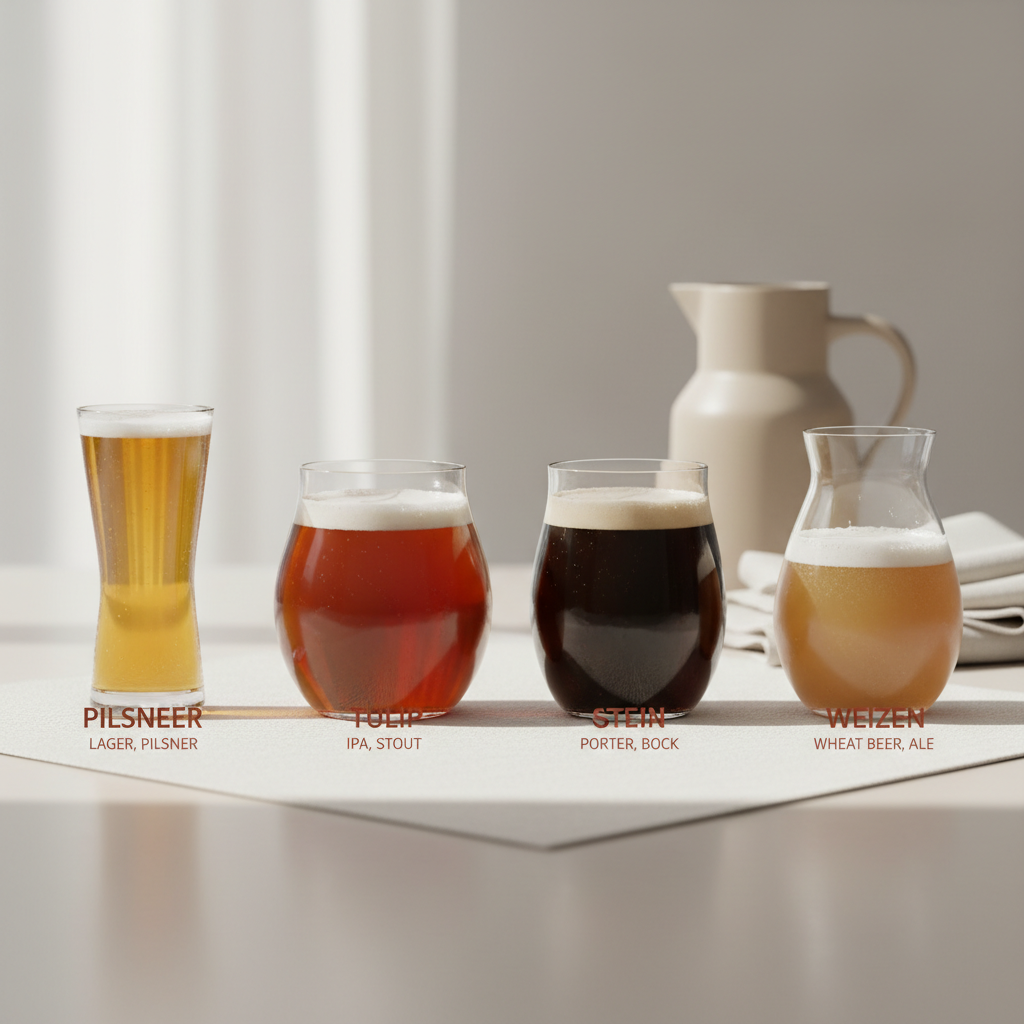
Select and Prepare the Right Glass
While you can drink beer straight from the bottle or can, using a glass greatly enhances the experience by releasing aromas and allowing you to see the color and clarity. Common glass types: 1. Pint glass — The classic all-rounder, great for lagers, ales, and stouts. 2. Tulip glass — Curved to trap aromas, ideal for IPAs, Belgian ales, and sour beers. 3. Weizen glass — Tall and narrow at the bottom, designed for wheat beers. 4. Mug or stein — Heavy and sturdy, great for casual drinking of lagers. To prepare your glass: 1. Make sure the glass is clean and free of soap residue, which kills the foam head. 2. You can rinse it with cold water just before pouring to keep the beer cool and reduce excess foam.
A clean glass is critical. Even a tiny bit of grease or soap residue will cause the foam head to collapse immediately and affect the taste.
Common mistakes
- ×Using a dirty or greasy glass, which destroys the foam and can add off-flavors.
- ×Using a frosted glass straight from the freezer — extreme cold can shock the beer and mute its flavor.
Step 4 of 6
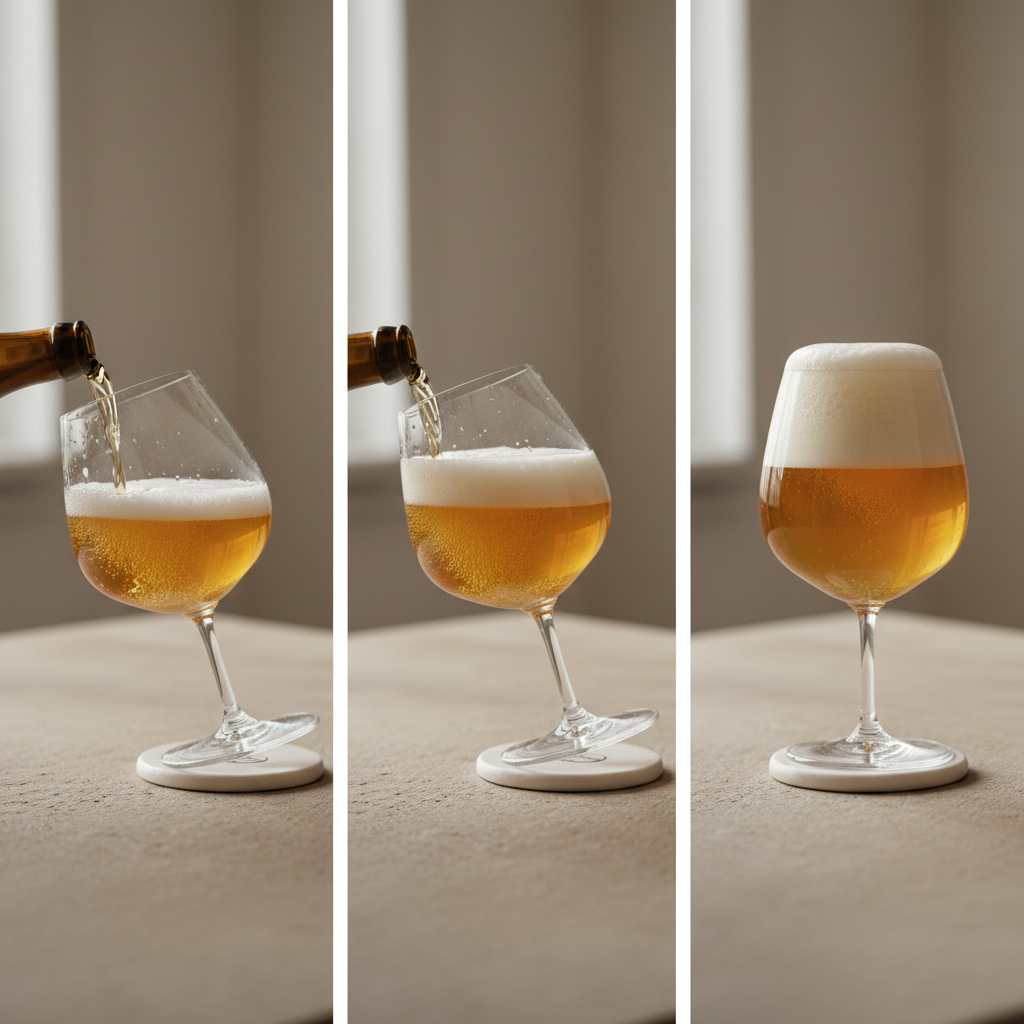
Pour the Beer Correctly
A good pour creates a proper foam head, which releases aromas and improves the overall drinking experience. Here is how to do it: 1. Hold the glass at a 45-degree angle. 2. Begin pouring the beer slowly down the inside wall of the tilted glass. This reduces agitation and controls foam. 3. When the glass is about halfway full, gradually tilt the glass upright. 4. For the final portion, pour straight down into the center of the glass to build a foam head of about 2–3 cm (1 inch). 5. Stop pouring when you have a nice head of foam sitting on top. For canned beers, crack the tab gently to avoid a sudden pressure release that causes overflow.
Do not be afraid of the foam head — it is a sign of a well-poured beer and actually enhances the aroma and flavor.
- If If too much foam forms and threatens to overflow, do Stop pouring, wait 30–60 seconds for the foam to settle, then continue pouring slowly..
- If If almost no foam forms at all, do Tilt the glass upright sooner and pour the last bit straight down to encourage a small head..
Common mistakes
- ×Pouring straight down from the start, which creates too much foam and wastes beer.
- ×Pouring too slowly and ending up with almost no head at all.
- ×Tilting the bottle or can too aggressively, causing the beer to gush.
Step 5 of 6

Observe the Beer Before Drinking
Taking a moment to look at and smell your beer before the first sip is a simple habit that dramatically increases your enjoyment. Look: 1. Hold the glass up to the light and notice the color — is it pale gold, amber, deep brown, or jet black? 2. Check the clarity — is it crystal clear, slightly hazy, or opaque? Hazy beers are often unfiltered wheat beers or hazy IPAs. 3. Observe the foam head — a thick, creamy head is a good sign. Smell: 1. Bring the glass to your nose and take a gentle sniff. 2. Try to identify aromas: citrus, pine, bread, caramel, coffee, fruit, or flowers. 3. Swirl the glass gently to release more aroma before sniffing again. This step trains your palate and helps you anticipate the flavors you are about to taste.
About 80% of what we taste is actually smell. Spending a few seconds smelling your beer will make the first sip much more rewarding.
Common mistakes
- ×Skipping the observation step and missing out on half the sensory experience.
- ×Sniffing too aggressively — a gentle inhale is enough and prevents the carbonation from irritating your nose.
Step 6 of 6
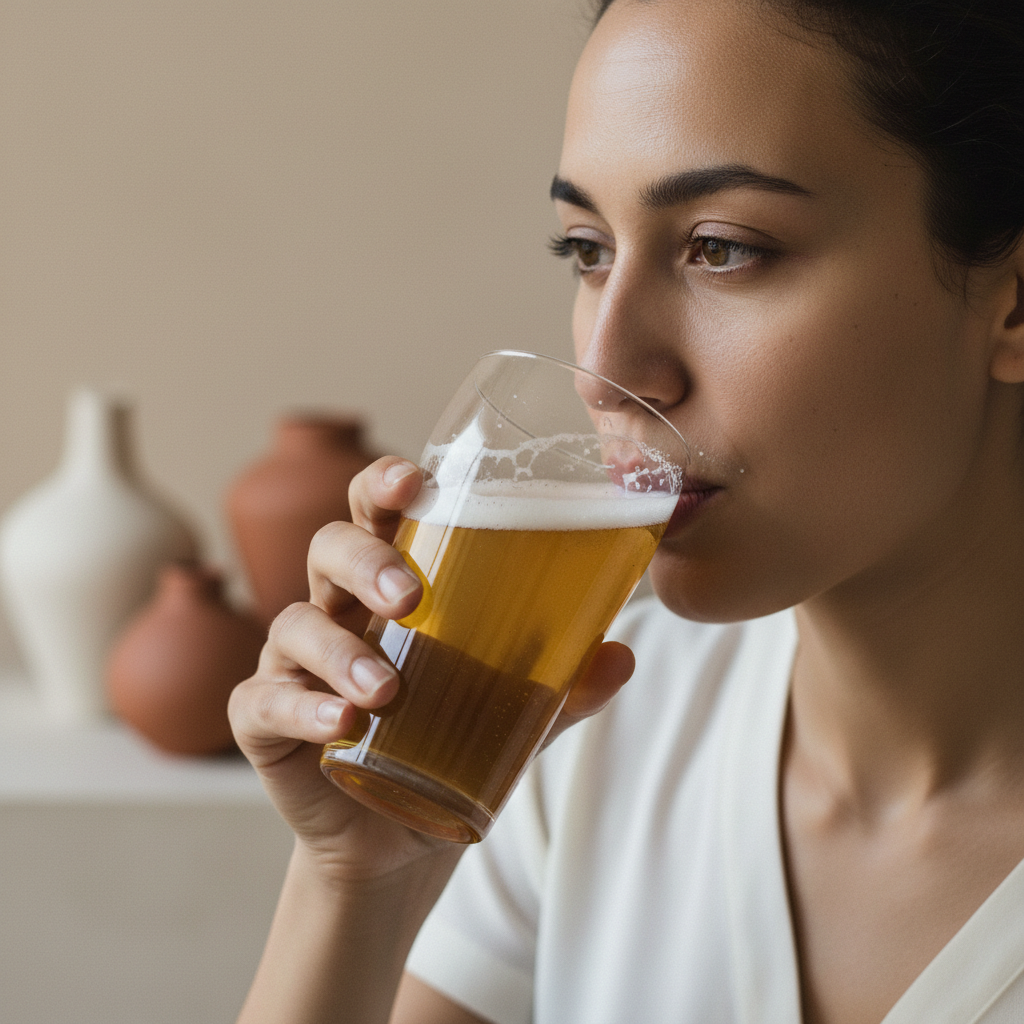
Take Your First Sip and Drink Mindfully
Now it is time to drink. Here is how to get the most out of each sip: 1. Take a moderate sip — not too small (you will not taste much) and not a huge gulp. 2. Let the beer sit on your tongue for a moment before swallowing. Notice the flavors: is it sweet, bitter, sour, roasty, or fruity? 3. Pay attention to the mouthfeel — is it light and fizzy, creamy, or thick? 4. After swallowing, notice the finish — the lingering taste left in your mouth. A long, pleasant finish is a hallmark of a quality beer. 5. Drink at a relaxed pace. Sipping slowly lets you enjoy the flavors as the beer warms slightly in the glass, which often reveals new aromas and tastes. Remember: the goal is enjoyment, not speed. Drink at a comfortable pace and stay aware of how you feel.
Try pairing your beer with food. Lagers go well with pizza or fried food, IPAs complement spicy dishes, and stouts pair beautifully with chocolate or grilled meats.
- If If the beer tastes too bitter or strong for your liking, do Try a different style next time, such as a wheat beer or lager, which are milder and more approachable..
- If If you feel any dizziness, nausea, or discomfort, do Stop drinking, drink a glass of water, eat some food, and rest. Do not consume more alcohol..
Common mistakes
- ×Drinking too fast, which prevents you from tasting anything and increases intoxication rapidly.
- ×Drinking on an empty stomach, which accelerates alcohol absorption and can lead to discomfort.
- ×Letting the beer get too warm by holding the glass in your palm for too long — hold it by the stem or handle when possible.
Sources
Generated from model knowledge — verify any factual claims independently.